

Blog
Saw Palmetto: The Natural DHT Blocker for Hair Loss, PCOS, and Prostate Health
Nov
What if one plant could help address a hormone linked to hair thinning, oily skin, unwanted facial hair, and prostate enlargement?
Meet saw palmetto, a small palm tree whose berries have been used in traditional medicine for centuries.
Today, saw palmetto is one of the most popular herbal supplements for men’s health. But researchers are also investigating its potential benefits for women experiencing hormone-related hair loss and symptoms associated with polycystic ovary syndrome (PCOS).
Its main attraction? The possibility of reducing the activity of DHT, a powerful hormone that can influence hair follicles, skin, and prostate tissue.
Let’s explore how it works, what scientific studies have found, and how to use it safely.
What Is Saw Palmetto?
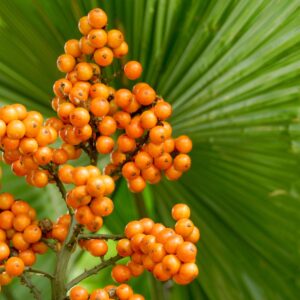
Saw palmetto (Serenoa repens) is a small palm native to the southeastern United States, particularly Florida and the Gulf Coast.
It is recognized by its fan-shaped leaves with saw-like edges and its dark purple berries.
Native American communities traditionally used the berries for various health purposes. By the early twentieth century, saw palmetto had also become popular for urinary and reproductive health.
Today, supplements are available as dried berries, powders, capsules, tablets, tinctures, and concentrated extracts.
The most studied preparations are fat-rich extracts containing fatty acids and plant sterols.
These compounds are believed to contribute to saw palmetto’s potential hormonal effects.
How Does Saw Palmetto Affect DHT?
To understand saw palmetto, we first need to understand one important hormone: dihydrotestosterone (DHT).
DHT is produced when an enzyme called 5-alpha reductase converts testosterone into a more potent androgen.
Androgens are hormones involved in sexual development, reproductive function, skin oil production, and hair growth.
DHT is essential for normal male development, but it can also contribute to certain conditions in genetically susceptible individuals.
For example:
- In the scalp, DHT can gradually shrink sensitive hair follicles, leading to thinning hair.
- In the skin, androgen activity can contribute to excessive oil production and acne.
- In women, increased androgen activity can contribute to unwanted facial or body hair.
- In the prostate, DHT helps regulate tissue growth and is involved in benign prostate enlargement.
Laboratory research suggests that compounds in saw palmetto may inhibit 5-alpha reductase and interfere with some androgen-related activity.
This is why saw palmetto is often described as a natural DHT blocker.

1. Saw Palmetto for Hair Loss: Can It Help Hair Grow Back?
One of the most promising areas of saw palmetto research is androgenetic alopecia, also known as pattern hair loss.
This condition affects both men and women.
In people who are genetically sensitive to DHT, hair follicles gradually become smaller.
Over time, they produce thinner and shorter hairs until visible thinning develops.
Because saw palmetto may influence DHT-related pathways, researchers have investigated whether it could slow this process.
What Do Clinical Studies Show?
Several small studies have reported encouraging findings.
One study involving 10 men with androgenetic alopecia found that approximately 70% reported improvement after taking a saw palmetto-containing supplement for one year.
Another study involving men and women investigated topical saw palmetto preparations and reported improvements in hair density and scalp oil production.
Other preliminary research has examined saw palmetto combined with ingredients such as beta-sitosterol or ketoconazole.
These findings suggest possible benefits, but many studies are small, use different formulations, or combine several ingredients.
Saw palmetto may help some people with pattern hair loss, but it is not as well established as treatments such as minoxidil or finasteride.
2. Saw Palmetto for Women: Could It Help With PCOS?

Polycystic ovary syndrome (PCOS) is a common hormonal and metabolic condition that can affect ovulation, menstrual regularity, insulin sensitivity, and androgen levels.
Some women with PCOS experience increased androgen activity, which may contribute to:
- Acne and oily skin.
- Excess facial or body hair, known as hirsutism.
- Hair thinning around the scalp.
- Irregular or missed menstrual periods.
Because saw palmetto may interfere with DHT-related activity, it has attracted attention as a possible supplement for women experiencing androgen-related symptoms.
Can It Reduce Acne and Oily Skin?
Androgens stimulate the skin’s oil-producing glands.
When androgen activity is elevated, the skin may produce more sebum, contributing to oily skin and acne.
Saw palmetto has been investigated for its potential to influence these pathways.
However, direct clinical evidence that oral saw palmetto improves acne in women with PCOS remains limited.
What About Unwanted Facial Hair?
DHT and other androgens influence hair growth on the face and body.
In women with hirsutism, increased androgen activity can stimulate coarse hair growth in areas such as the chin, chest, and abdomen.
Saw palmetto may theoretically reduce some androgen-related effects.
3. Saw Palmetto for Enlarged Prostate: What Does Research Say?
Benign prostatic hyperplasia (BPH) is a noncancerous enlargement of the prostate that becomes increasingly common with age.
As the prostate grows, it can press against the urethra, the tube that carries urine out of the body.
This may cause:
- Difficulty starting urination.
- Weak urine flow.
- Frequent urination, especially at night.
- A sensation that the bladder has not emptied completely.
Because DHT participates in prostate growth, saw palmetto has long been investigated for BPH.
4. Does Saw Palmetto Lower Testosterone?
A common concern is whether blocking DHT also lowers testosterone.
These are not the same process.
Testosterone is converted into DHT by the enzyme 5-alpha reductase.
Saw palmetto is being studied mainly for its possible influence on this conversion, rather than for directly suppressing testosterone production.
Most human studies have not found major changes in total testosterone levels.
5. Other Potential Benefits: Inflammation, Pelvic Pain, and More
Saw palmetto berries contain fatty acids, plant sterols, and other compounds being investigated for their biological activity.
Laboratory research suggests possible anti-inflammatory effects.
Traditionally, saw palmetto has also been used for urinary discomfort, reproductive health, and conditions such as chronic pelvic pain.
Some sources additionally discuss its use for migraines, asthma, bronchitis, and libido.
However, convincing clinical evidence for these uses is lacking.
Saw palmetto should not be considered a proven treatment for these conditions.
How to Choose the Best Saw Palmetto Supplement
Not all saw palmetto products are the same.
Most clinical research has used concentrated lipid extracts rather than ordinary berry tea or whole-berry powder.
When choosing a supplement, consider:
- Standardized extract: Many studied products contain approximately 85–95% fatty acids and sterols, although extract specifications vary.
- Clear dosage: The label should state the amount of saw palmetto extract rather than hiding it within a proprietary blend.
- Independent quality testing: Look for manufacturers that verify ingredient identity, purity, and potential contaminants.
- Simple ingredients: Avoid unnecessary additives or products making exaggerated hormonal claims.
Because the active fatty components are poorly soluble in water, saw palmetto tea is not equivalent to the concentrated extracts used in most studies.
How Much Saw Palmetto Should You Take?
Clinical studies have commonly investigated 160–320 mg of standardized extract daily, often as 160 mg twice daily or 320 mg once daily.
Hair-loss studies have used various oral and topical formulations.
However, these are research doses, not universally established recommendations.
There is no clinically validated saw palmetto dose for treating PCOS, acne, or hirsutism.
Saw palmetto is often taken with food to improve digestive tolerance, particularly when using fat-rich extracts.
The appropriate formulation, dose, and duration should be discussed with a healthcare professional.
Who Should Avoid Saw Palmetto?
Saw palmetto is generally well tolerated in short-term clinical studies, but it is not suitable for everyone.
Avoid saw palmetto during pregnancy and breastfeeding because of its potential hormonal activity and insufficient safety evidence.
Consult a healthcare professional before using it if you:
- Take blood-thinning or antiplatelet medications.
- Use finasteride, dutasteride, or other hormone-related treatments.
- Take hormonal contraceptives or hormone therapy.
- Are preparing for surgery.
- Have a hormone-sensitive medical condition.
There is no strong clinical evidence that saw palmetto reduces the effectiveness of birth control pills, but possible interactions should be reviewed before combining them.
Possible Side Effects
Reported side effects include nausea, abdominal discomfort, diarrhea, headache, dizziness, and occasionally changes in sexual function.
Most clinical studies report relatively mild adverse effects, but long-term safety information remains limited.
Final Thoughts: Is Saw Palmetto Worth Trying?
Saw palmetto is an interesting herbal supplement because of its potential influence on the enzyme responsible for converting testosterone into DHT.
This mechanism has attracted attention for hair thinning, androgen-related skin problems, PCOS symptoms, and prostate health.
Among these uses, preliminary hair-loss research is encouraging, but the evidence is still limited.
For enlarged prostate symptoms, larger clinical trials have generally not demonstrated meaningful benefits over placebo.
And for women with PCOS, there is not enough evidence to consider saw palmetto a proven treatment for acne, unwanted hair growth, or menstrual irregularities.
The most important step is understanding why your symptoms are happening in the first place.
Hair loss may involve androgen sensitivity, but it can also result from iron deficiency, thyroid dysfunction, nutritional deficiencies, or other conditions.
Similarly, PCOS requires an approach that addresses both hormonal and metabolic health.
If you’d like to discover one of the most powerful herbs for managing PCOS and relieving its symptoms, don’t forget to watch Dr. Fajer’s video below on her YouTube channel: