

Blog
Manuka Honey Benefits: A Natural Antibacterial for SIBO Symptoms, Wound Healing, Skin, and More
Nov
What if one type of honey could do more than sweeten your tea? What if it also contained a natural compound powerful enough to fight certain harmful bacteria, support wound healing, and protect your skin?
That’s what makes Manuka honey different from ordinary honey.
Produced from the flowers of the Manuka bush, this dark, nutrient-rich honey has attracted scientific attention for its unusual antibacterial activity.
Researchers have investigated its effects on wound healing, oral health, sore throats, and digestive bacteria, including Helicobacter pylori (H. pylori).
But does Manuka honey really deserve its reputation as a natural healing remedy? And how do you choose the right strength?
Let’s explore what the science says, how to read Manuka honey labels, and the safest ways to use it.
What Is Manuka Honey?

Manuka honey is a special type of honey produced by bees that collect nectar from the Manuka plant (Leptospermum scoparium), which grows primarily in New Zealand and parts of southeastern Australia.
Unlike many other honeys, Manuka contains unusually high amounts of methylglyoxal (MGO), a naturally occurring compound responsible for much of its distinctive antibacterial activity.
Although other honeys may contain small amounts of MGO, Manuka is especially known for its higher concentrations.
It also provides antioxidants and plant compounds that may help protect cells from damage.
Manuka Honey Nutrition Facts
Despite its unique properties, Manuka honey is still primarily a source of natural sugars.
One tablespoon (approximately 21 grams) contains:
- Calories: Approximately 64.
- Total sugars: Approximately 17.2 grams.
- Main sugars: Fructose and glucose.
- Fat: Essentially none.
- Minerals: Small traces of potassium and other minerals.
Manuka honey contains beneficial plant compounds, but it is not a significant source of vitamins or minerals.
Its potential health benefits come mainly from its antibacterial and antioxidant properties rather than its nutritional content.
What Makes Manuka Honey So Powerful? The Science Behind MGO
The secret behind Manuka honey begins before the bees even produce it.
Manuka flower nectar contains a natural compound called dihydroxyacetone (DHA).
After bees transform the nectar into honey, DHA gradually converts into methylglyoxal (MGO) during storage.
This explains why freshly produced Manuka honey may initially contain relatively little MGO, with its concentration increasing as the honey matures.
However, heating honey does not create additional MGO. Excessive heat can instead damage other beneficial components and reduce overall quality.
How Does MGO Fight Bacteria?
MGO can interfere with important processes inside bacterial cells, making it more difficult for certain bacteria to survive and multiply.
Manuka honey also has other properties that contribute to its antimicrobial effects, including its high sugar concentration, low water availability, and natural acidity.
These properties work together to create an environment that many harmful microbes struggle to tolerate.
Interestingly, laboratory research has shown that Manuka honey can retain antibacterial activity even after significant dilution.
In one experiment, Manuka honey diluted up to 80-fold still demonstrated activity against methicillin-resistant Staphylococcus aureus (MRSA) after 24 hours.
This is important because honey applied to a wound becomes diluted by moisture and wound fluid.
1. Manuka Honey for Wound Healing and Burns
One of the best-studied medical uses of honey is wound care.
Medical-grade honey dressings are used in certain clinical settings to help manage wounds and burns.
Manuka honey may support wound healing through several mechanisms.
Antibacterial protection: Its MGO content and other antimicrobial properties can help limit the growth of certain bacteria on the wound surface.
Moisture balance: Honey helps maintain a moist environment, which supports normal tissue repair.
Removal of damaged tissue: Honey dressings can help soften and loosen dead tissue, allowing the wound to heal more effectively.
Inflammation control: Some research suggests honey may influence local inflammation and support the body’s healing response.
Clinical trials have also investigated Manuka honey dressings for diabetic foot ulcers, with mixed findings.
Important: Never apply ordinary Manuka honey from a food jar directly to an open wound. Only sterile, medical-grade honey products should be used for wound care, with professional guidance.
2. Can Manuka Honey Help Sore Throats and Coughs?

Honey has long been used to soothe irritated throats, and modern research provides some support for this traditional practice.
Its thick texture coats the throat, helping reduce irritation and the sensation that triggers coughing.
Honey may also have local antimicrobial and anti-inflammatory effects.
Systematic reviews suggest that honey can reduce cough frequency and severity in some children with upper respiratory infections.
How to Use It
Try stirring one teaspoon of Manuka honey into warm ginger or thyme tea.
Allow the tea to cool to a comfortable drinking temperature before adding the honey.
This can provide soothing relief, but it does not replace medical treatment for bacterial throat infections or persistent symptoms.
Never give honey to children under one year of age.
3. Manuka Honey for Gut Health: Can It Help H. pylori, IBS, and SIBO?
The relationship between Manuka honey and gut health is one of the most interesting areas of emerging research.
Scientists are investigating whether its antibacterial compounds and naturally occurring carbohydrates can influence the microorganisms living in the digestive system.
Manuka Honey and H. pylori

Helicobacter pylori is a bacterium that can infect the stomach lining and contribute to gastritis and peptic ulcers.
Laboratory studies have found that Manuka honey can inhibit the growth of several H. pylori strains.
In some experiments, even relatively low concentrations of Manuka honey showed antibacterial activity against bacteria collected from human stomach samples.
Animal research has also suggested that Manuka-related preparations may reduce bacterial activity and inflammation in the stomach.
What About SIBO and IBS?
Small intestinal bacterial overgrowth (SIBO) occurs when excessive numbers of bacteria are present in the small intestine.
Irritable bowel syndrome (IBS) is a disorder involving abdominal pain and changes in bowel habits.
In fact, honey contains fructose, which can worsen bloating, gas, or diarrhea in some people with IBS or SIBO, particularly those sensitive to fermentable carbohydrates.
If you experience these symptoms, start with a very small amount.
Is Manuka Honey a Prebiotic?
Manuka honey contains small amounts of complex carbohydrates called oligosaccharides.
Some laboratory studies suggest that honey-derived oligosaccharides may encourage the growth of beneficial bacteria such as Bifidobacterium and Lactobacillus.
This has led researchers to investigate honey’s possible prebiotic properties.
A prebiotic is a substance that beneficial microorganisms can use as food.
Can Manuka Honey Heal a Leaky Gut?
The term leaky gut is commonly used to describe increased intestinal permeability, a condition in which the intestinal barrier becomes more permeable than normal.
Some experimental research suggests that honey compounds may influence inflammation and gut microorganisms.
4. Manuka Honey for Gum Health and Oral Bacteria
Manuka honey has also attracted attention in dentistry.
Harmful oral bacteria contribute to plaque buildup, gum inflammation, and periodontal disease.
Because Manuka honey has antibacterial properties, researchers have investigated its possible effects on oral health.
Small clinical studies have explored Manuka-containing rinses and other preparations for gum inflammation.
One trial reported a reduction in C-reactive protein (CRP), a marker associated with inflammation.
5. Manuka Honey for Skin: Acne, Dryness, and Skin Repair

Manuka honey is increasingly used in skincare because of its antibacterial, moisturizing, and antioxidant properties.
Can It Help Acne?
Acne develops through several processes, including increased oil production, blocked pores, inflammation, and the activity of certain skin bacteria.
Manuka honey has demonstrated antibacterial and anti-inflammatory activity in laboratory studies.
This has led to interest in its potential use for acne-prone skin.
Does It Help Dry Skin?
Honey is a natural humectant, meaning it attracts and helps retain moisture.
This property may help soften dry skin and temporarily improve hydration.
It can also create a protective layer over the skin surface.
What About Wrinkles and Collagen?
Manuka honey contains antioxidants that may help reduce oxidative damage.
Researchers have also studied compounds from Manuka plants for their potential effects on enzymes involved in collagen breakdown.
How to Use It on Your Skin
For intact skin, a small amount may be applied briefly as a moisturizing mask.
Always test a small area first, particularly if you have sensitive skin, eczema, or a history of allergies.
Stop using it if you experience itching, burning, swelling, or worsening irritation.
6. Manuka Honey and Antioxidants: Why Darker Honey Matters
Honey contains natural antioxidants, including phenolic acids and flavonoids.
These compounds help neutralize unstable molecules known as free radicals, which can damage cells when present in excessive amounts.
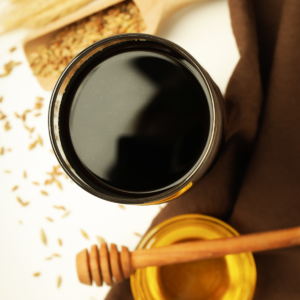
Research comparing 42 Australian honeys found that darker honeys generally had higher antioxidant activity.
Manuka-type honeys were among the darkest and consistently showed high antioxidant measurements.
This suggests that Manuka honey can provide more antioxidant activity than some lighter varieties.
7. Manuka Honey vs. Raw Local Honey: Which Is Better?
Both Manuka honey and raw local honey contain natural sugars, antioxidants, and compounds that can inhibit certain bacteria.
The main difference is the source and type of their antibacterial activity.
Manuka Honey
Manuka honey is especially known for its high MGO content.
MGO contributes to antibacterial activity that can remain measurable even when the honey is diluted.
This makes standardized Manuka honey particularly interesting for medical-grade wound products and laboratory research.
Raw Local Honey
Raw local honey may contain pollen, enzymes, antioxidants, and plant compounds from flowers in the surrounding region.
Its composition varies depending on the plants visited by the bees.
Some types of honey rely more heavily on hydrogen peroxide and other natural components for their antibacterial activity.
Raw local honey is often recommended for seasonal allergies, but scientific evidence does not consistently show that eating local honey prevents or treats pollen allergies.
Which should you choose?
For everyday sweetening, either can be enjoyed in moderation.
If you specifically want Manuka honey’s standardized MGO content, choose a verified product with a clear rating.
Neither type should be considered a treatment for allergies, infections, or digestive diseases.
8. What Do MGO and UMF Mean on Manuka Honey Labels?
When buying Manuka honey, you will usually notice numbers such as MGO 250+, MGO 400+, or UMF 10+.
These ratings help describe the honey’s composition and quality.
What Is MGO?
MGO stands for methylglyoxal.
The MGO number indicates how much methylglyoxal is present in the honey, measured in milligrams per kilogram.
For example, MGO 400+ indicates at least 400 mg of methylglyoxal per kilogram of honey.
Higher MGO values generally indicate greater potential antibacterial activity in laboratory testing.
However, a higher number does not automatically mean greater health benefits when eaten.
What Is UMF?
UMF stands for Unique Manuka Factor.
It is a certification system that evaluates several characteristics of Manuka honey.
The system considers four important markers:
MGO: Indicates methylglyoxal content.
Leptosperin: Helps verify the honey’s Manuka origin.
DHA: A natural precursor that gradually converts into MGO.
HMF: A compound used as an indicator of excessive heating or aging.
For example, UMF 10+ corresponds to a minimum MGO level of approximately 261 mg/kg.
UMF certification therefore provides more information than an MGO number alone.
Which Manuka Honey Strength Should You Choose?
Manuka products are commonly sold in several MGO ranges.
MGO 30–100: Often marketed for everyday use.
MGO 140–250 : Commonly sold as an intermediate-strength option.
MGO 340–540: Higher-MGO varieties.
MGO 640–940: Very high-MGO products.
MGO 1000–1300: Among the highest-MGO varieties available.
These ranges are commercial product categories, not medically established doses.
If you are trying to find the right MGO rate for IBS and SIBO healing programs, a range from 250-300 MGO is usually prescribed.
9. How Much Manuka Honey Should You Eat Daily?
For most healthy adults, Manuka honey can be enjoyed in small amounts as part of a balanced diet.
A practical serving is approximately one teaspoon to one tablespoon per day, depending on overall sugar intake and individual nutritional needs.
One teaspoon contains roughly 21 calories and 5.7 grams of sugar.
One tablespoon contains approximately 64 calories and 17.2 grams of sugar.
There is no scientifically established daily dose of Manuka honey for improving gut health, immunity, or general wellness.
The best approach is to use it instead of other added sweeteners, rather than adding it on top of your usual sugar intake.
Simple Ways to Use Manuka Honey
- Stir one teaspoon into warm ginger or thyme tea.
- Add a small amount to plain Greek yogurt.
- Drizzle it over oatmeal.
- Mix a little with coconut oil as part of a recipe.
- Enjoy a small spoonful on its own.
If you have digestive sensitivities, pay attention to how your body responds.
10. Can People With Diabetes Eat Manuka Honey?
Manuka honey is still a concentrated source of sugar.
Although it contains antioxidants and MGO, these compounds do not eliminate its effects on blood glucose.
Manuka honey should not be considered a diabetes-friendly sweetener that can be consumed without limits.
If you have diabetes:
- Keep portions small, such as half a teaspoon when appropriate.
- Count honey toward your daily carbohydrate intake.
- Monitor your blood glucose response.
- Consider pairing it with foods containing protein or fiber, such as plain yogurt or nuts.
- Avoid adding it to meals or drinks already high in sugar.
Discuss regular use with your healthcare professional if you take insulin or medications that can cause low blood sugar.
11. How to Buy and Store Authentic Manuka Honey
Because Manuka honey is often expensive, choosing an authentic product matters.
Look for a clear MGO or UMF rating. This helps verify the product’s stated characteristics.
Choose independently tested honey. Reliable manufacturers should provide information about testing, origin, and traceability.
Check the ingredient list. It should contain honey without added sugar syrups or sweeteners.
Pay attention to processing. Excessive heating can affect some natural honey components. However, raw honey is not automatically safer or more effective than properly processed honey.
Store it correctly. Keep the jar tightly closed at room temperature, away from direct sunlight and excessive heat.
Crystallization is natural and does not necessarily indicate poor quality.
If the honey crystallizes, place the closed jar in warm water to soften it gently.
12. Manuka Honey Side Effects: Who Should Avoid It?
Although Manuka honey is generally safe as a food for most adults, several precautions are important.
Infants Under One Year
Never give Manuka honey or any other honey to babies younger than 12 months.
Honey can contain spores of Clostridium botulinum, the bacterium responsible for infant botulism.
Cooking honey does not reliably eliminate this risk.
People With Bee-Product Allergies
People with allergies to honey or certain bee products may experience allergic reactions.
Symptoms can include itching, hives, swelling, or difficulty breathing.
A history of pollen or bee-sting allergy does not automatically mean someone will react to honey, but caution is appropriate when there has been a previous reaction to bee products.
People With Diabetes or Insulin Resistance
Manuka honey contains significant amounts of sugar and can raise blood glucose.
Portion control is important, even when choosing high-MGO products.
People With IBS or SIBO
Honey’s fructose content may trigger bloating, gas, or diarrhea in sensitive individuals.
If you are following a low-FODMAP dietary approach, honey may need to be limited.
People With Open Wounds or Burns
Do not use ordinary edible honey on open wounds.
Only sterile medical-grade honey dressings are appropriate for wound treatment when recommended by a healthcare professional.
Final Thoughts: Is Manuka Honey Worth It?
Manuka honey is more than an ordinary sweetener.
Its naturally occurring MGO, antioxidant compounds, and distinctive antibacterial activity make it an interesting subject of scientific research.
When choosing a product, look for authentic, independently tested honey with a clear UMF or MGO rating.
And remember: even the highest-quality Manuka honey is still honey. Its benefits should be considered alongside its sugar content, not instead of it.
Used thoughtfully, Manuka honey can be a flavorful addition to a healthy diet while offering natural compounds that continue to interest researchers.
If you need more informations about how to heal from SIBO naturally, watch the full video below on Dr.Fajer’s youtube channel: