

Blog
Can 3 Days of Ramadan Fasting Start Healing Leaky Gut? New Scientific Findings
Feb
Most people try to heal leaky gut with supplements — L-glutamine, zinc, probiotics, bone broth. And while these tools are helpful, many overlook one of the most powerful, free, biologically intelligent interventions available: Fasting.
Not as a weight-loss trend, Not as a quick detox. But as a physiological reset for the gut barrier, because your gut does not only need nutrients, It also needs rest.
Ramadan, when practiced intentionally, may offer a unique metabolic and inflammatory reset that supports gut repair — and emerging research is beginning to explain why.
Understanding the Gut Barrier and Why It Breaks Down

The human gut microbiome is a complex ecosystem containing trillions of bacteria, fungi, viruses, and other microbes. These microorganisms assist in digestion, vitamin production, immune regulation, and protection against harmful pathogens.
The intestine is lined by a single layer of cells called the epithelium. This delicate layer acts as a protective barrier, preventing toxins, undigested food particles, and harmful bacteria from entering the bloodstream. The cells are held together by proteins known as tight junctions — microscopic seals that regulate what passes through.
Under normal conditions, the gut lining renews itself every 3 to 5 days. This rapid regeneration allows it to withstand daily stress from digestion and immune exposure.
However, chronic stress, inflammatory diets, dysbiosis, high sugar intake, excessive omega-6 fats, metabolic stress, and food sensitivities can weaken these tight junctions. When this happens, intestinal permeability increases — commonly referred to as “leaky gut.”
Once permeability increases, a vicious cycle begins:
- Bacteria and toxins enter circulation
- The immune system activates
- Inflammation spreads
- Symptoms appear
These may include bloating, constipation, IBS, SIBO, fatigue, brain fog, eczema, psoriasis, acne, and even autoimmune conditions like Hashimoto’s.
At the root of this cycle: inflammation and microbial imbalance (dysbiosis and SIBO).
Why Fasting May Trigger Rapid Gut Repair
Fasting activates several biological mechanisms that directly support intestinal healing.
1. Mechanical Rest for the Gut
Every time we eat, the digestive system is stimulated — acid secretion, enzyme release, bile flow, immune activity, and gut motility all increase. When eating is frequent, the gut rarely enters repair mode.
Fasting removes continuous stimulation, allowing the intestinal lining to shift from digestion to regeneration. Ramadan fasting, especially when paired with a clean anti-inflammatory diet at iftar, provides extended periods where repair can occur uninterrupted.
2. Activation of Autophagy
Autophagy is the body’s cellular clean-up system. It becomes more active after 12–16 hours of fasting and helps remove damaged cells, including injured intestinal epithelial cells.
This process is crucial in leaky gut. You cannot rebuild strong tissue on top of dysfunctional cells. Autophagy clears the foundation so new, healthier cells can replace them.
3. Tight Junction Support and Reduced Inflammation
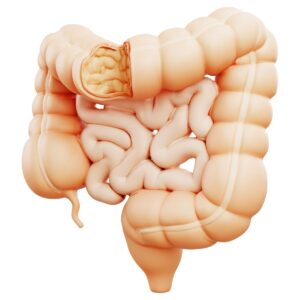
Inflammation keeps tight junctions open. Fasting lowers inflammatory signaling, improves insulin sensitivity, reduces oxidative stress, and decreases metabolic overload — all of which contribute to restoring tight junction integrity.
Research on intermittent fasting shows improvements in gut barrier function and reductions in systemic inflammation markers.
4. Microbiome Remodeling
Fasting alters the microbial environment in favor of beneficial species. Studies have shown during fasting, increased abundance of bacteria such as Akkermansia muciniphila and Faecalibacterium prausnitzii, both associated with improved gut barrier function.
During fasting:
- Yeast overgrowth decreases
- Fermentation pressure reduces
- Microbial diversity improves
These beneficial microbes produce short-chain fatty acids like butyrate, which signal tight junction repair and reduce inflammation.
5. Growth Hormone and Cellular Repair
Fasting increases growth hormone secretion, which supports tissue repair, regeneration, and metabolic balance. Combined with improved insulin sensitivity, this creates a powerful anabolic environment for healing.
Because gut cells have a short lifespan — typically 2 to 7 days — improvements may appear relatively quickly when the repair environment is optimized.
New Research: Stress, Reelin, and the Gut-Brain Axis
Recent studies have identified a protein called Reelin as essential for maintaining gut barrier integrity.
Reelin supports:
- Proper migration of epithelial cells
- Structural stability between gut cells
- Mucus layer production
Chronic stress has been shown to significantly reduce Reelin levels in the gut, leading to slower epithelial renewal and increased permeability.
This may help explain the strong connection between chronic stress, depression, and leaky gut.
Fasting can support this system indirectly by reducing inflammatory burden and metabolic stress. However, fasting must be paired with stress regulation. Excessive stress during fasting may counteract its benefits.
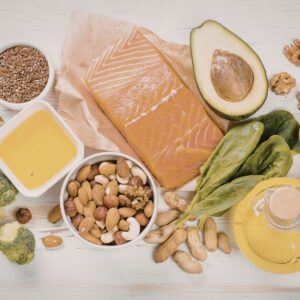
Supporting Reelin expression naturally may include:
- Reducing high-fat, ultra-processed diets
- Focus on moderate fat intake that include healthy fat like olive oil, avocado and salmon…
- Increasing omega-3 intake
- Using methylated B-complex if needed
- Controlling insulin resistance
How to Use Ramadan Fasting Correctly for Gut Healing
Fasting can support healing — but only when practiced strategically.
Avoid Irritants During Fasting
Sugary beverages, artificial sweeteners, and excessive caffeine can irritate the gut lining and disrupt repair mechanisms. Instead, hydrate with water and unsweetened herbal teas.
Break the Fast Gently

What you eat at iftar determines whether repair continues or reverses.
Start with light, digestible foods such as bone broth, vegetable soup, gently cooked vegetables, soft proteins like eggs or fish, and healthy fats such as olive oil or salmon. Avoid processed carbohydrates, refined sugar, fried foods, and heavy meals that overwhelm the gut.
Gradually Increase Fiber
Fiber feeds beneficial bacteria, but reintroducing too much too quickly can cause bloating. Gradually incorporate fiber-rich foods such as oats, artichokes, broccoli, leeks, green bananas, and pomegranate seeds.
Fermentation of fiber produces butyrate — a critical molecule for tightening junctions and reducing inflammation.
Consider Postbiotics
Emerging research suggests that postbiotics — beneficial metabolites produced by bacteria — may support gut repair without the potential irritation some sensitive individuals experience from probiotics.
Postbiotic-rich foods include sourdough bread, parmesan cheese, beet kvass, fermented vegetables, apple cider vinegar, and cooked-and-cooled rice or potatoes.
Nutritional Support That Complements Fasting

While fasting creates the repair environment, nutrients provide structural support.
Helpful options may include:
- L-Glutamine as primary fuel for intestinal cells
- Zinc carnosine for tight junction support
- Collagen and bone broth for structural rebuilding
- Quercetin for preserving tight junction proteins
- Curcumin for modulating inflammation
- Chamomile for calming nervous digestion
- Nigella sativa for supporting mucus production and tight junction integrity
- Sprouted chia, flax, and hemp seeds support gut bacteria with fiber, but in severe leaky gut it’s best to start with gentler sources like steamed vegetables and soft fruits.
- Butter naturally contains butyrate, a short-chain fatty acid that helps support the gut lining and reduce inflammation.
Avoid personal trigger foods such as gluten, dairy, or nightshades if sensitive, particularly if you have psoriasis, eczema, or autoimmune tendencies.
Signs Leaky Gut Is Healing
As repair progresses, improvements may include:
- Reduced bloating and digestive discomfort
- Decreased food sensitivities
- Clearer skin
- Improved autoimmune markers
- Better energy and mental clarity
Because the gut renews rapidly, noticeable changes may occur within days when conditions are optimized.
The Bigger Picture: Fasting Is a Reset, Not a Cure
Fasting alone does not correct severe dysbiosis, chronic SIBO, persistent gluten exposure, or unmanaged stress. However, it creates the biological conditions necessary for healing:
- Reduced inflammation
- Improved microbial diversity
- Enhanced autophagy
- Strengthened tight junction signaling
- Faster epithelial renewal
When stressors are removed, the gut does what it was designed to do — regenerate.
Final Thoughts
Healing leaky gut is not only about what you add, It is also about what you pause.
Ramadan offers a unique opportunity to give your digestive system structured rest, metabolic recalibration, and inflammatory reduction. When fasting is combined with intentional nutrition, stress regulation, and microbial support, the first 3 to 5 days may initiate meaningful repair.
Sometimes the most powerful intervention is not another supplement, It is space. And when you give your gut that space, it remembers how to heal.
if you ned more informations about how to heal leaky gut you can watch the full episode below on Dr. Fajer AlJumairi’s youtube channel: